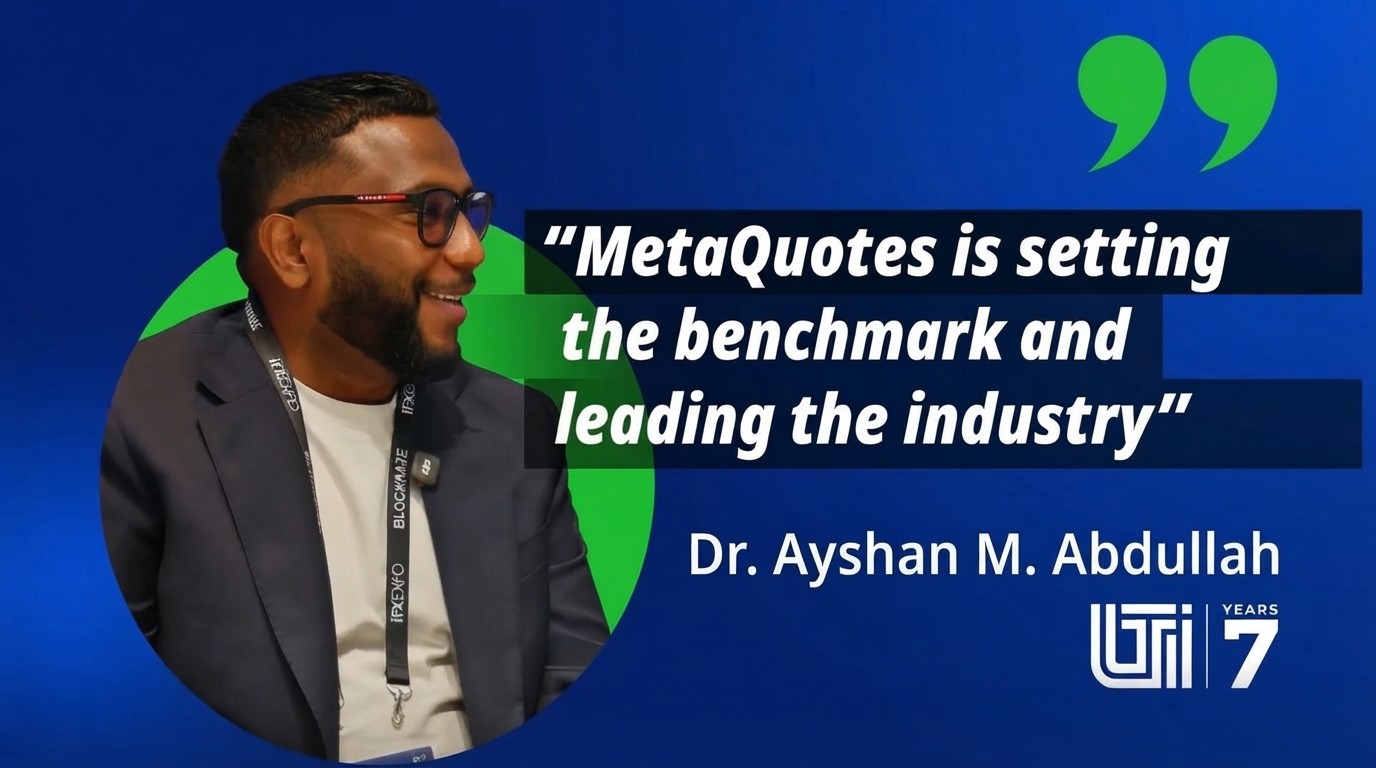
London Trading Index Featured in MetaQuotes Interview at iFX EXPO International 2026
MetaQuotes, the company behind the MetaTrader 5 platform, sat down with Dr. Ayshan M. Abdullah at iFX EXPO International 2026. He's the Managing Director of London Trading Index. MetaTrader 5 (MT5) is the multi-asset trading platform MetaQuotes builds and licenses to brokers. It's the same platform London Trading Index runs its Core, ECN, and Pro accounts on. The resulting piece, MetaQuotes Sets the Benchmark Up for the Entire Industry: An Interview with Dr. Ayshan M. Abdullah, traces how MT5 has changed since 2019, when MetaQuotes and LTI first started working together. It also covers where Dr. Ayshan sees the platform heading next. A video of the full interview is on MetaQuotes' site.
Key Takeaways
MetaQuotes interviewed Dr. Ayshan M. Abdullah, Managing Director of London Trading Index, at iFX EXPO International 2026.
The interview traces MT5's shift from a standalone trading terminal into a multi-asset platform supporting retail brokers, institutional clients, proprietary trading firms, and hedge funds.
Dr. Ayshan expects artificial intelligence and analytics to become central to MT5's future development.
LTI and MetaQuotes have worked together since 2019, seven years before this interview took place.
A Seven-Year Working Relationship
MetaQuotes and London Trading Index have worked together since 2019. iFX EXPO International is a recurring industry conference for the forex and CFD brokerage sector, and the venue where this interview took place. In it, Dr. Ayshan frames MetaQuotes less as a vendor shipping periodic updates. He sees it more as a company that sets the pace the rest of the industry ends up following. His view: MT5 has moved past its origins as a simple trading terminal, and now works as a multi-asset platform built to support very different kinds of trading businesses under one system.
A seven-year vendor relationship is unusually long in retail forex/CFD brokerage, where platform switches and white-label changes are common as brokers chase better commercial terms. That LTI has stayed on MT5 throughout says something about how the relationship has held up on both sides, not just about the day it first signed on.
Built for More Than One Kind of Business
A recurring point in the interview is flexibility. According to Dr. Ayshan, MT5's architecture accommodates retail brokers, institutional clients, proprietary trading firms, and hedge funds, and none of them get forced into a one-size-fits-all setup. For example, firms can plug in built-in risk-management tools, connect through APIs, or integrate their own proprietary systems, without ripping out and replacing their core infrastructure. For a broker, that's a meaningfully different proposition than switching platforms outright.
The interview also touches on the practical side of the MetaQuotes-LTI relationship: direct lines of communication that let LTI adopt new platform capabilities faster than a purely arm's-length vendor relationship would allow.
In Dr. Ayshan's account, this also means LTI can respond to shifts in the market more quickly, since platform changes don't have to wait on a slower, indirect support channel.
What This Means for Traders on LTI's MT5 Platform
For traders using London Trading Index's Core, ECN, and Pro accounts, the practical takeaway is continuity, not a promised new feature list. LTI runs its accounts on the same MT5 infrastructure discussed in the interview. A broker with a direct, multi-year relationship to the platform's developer is generally better placed to roll out stability improvements and new capabilities without disrupting how your charts and orders already behave. Expert Advisors (EAs) are automated trading programs that run on the MT5 terminal, and they keep working the same way through those changes too.
That doesn't change the underlying risk of trading forex and CFDs on leverage, but it does mean the platform layer you trade on is maintained by a broker with a longstanding line into how MT5 itself develops.
Read against LTI's own account structure, the interview's point about MT5 serving retail brokers, institutional clients, proprietary trading firms, and hedge funds on one system maps loosely onto why LTI offers more than one account tier in the first place. For instance, a Core account fits the straightforward retail case the interview describes, while the ECN and Pro tiers exist for traders who need tighter execution and infrastructure flexibility. The account-tier split isn't just a pricing artifact, it's a practical answer to MT5 having to serve genuinely different kinds of trading businesses on the same core platform.
MT5 business model (per the interview) | Closest LTI account tier |
|---|---|
Retail brokers' individual clients | Core |
Traders needing tighter execution or infrastructure flexibility | ECN / Pro |
Looking Ahead
Asked about where the platform goes from here, Dr. Ayshan points to artificial intelligence and analytics. He expects both to become central to MT5's future development, not side features bolted onto the existing terminal. The interview doesn't give a timeline or a concrete product roadmap.
About London Trading Index
London Trading Index Limited is incorporated in Saint Vincent and the Grenadines (registration number 25630) and authorised by the Financial Services Authority (FSA) of Saint Vincent and the Grenadines. London Trading Index is a registered trading name of Equivest (Mauritius) Limited, regulated by the Financial Services Commission (FSC) of Mauritius under licence number 00321997. LTI offers Core, ECN, and Pro trading accounts on MetaTrader 5, alongside Copy Trading, PAMM, and VPS hosting. Trading forex and CFDs involves leverage, and losses can exceed your initial deposit; most retail traders don't achieve consistent profitability.
To see the account types and MT5 setup discussed in this piece, visit the MT5 Platform page, learn more about us and open an account at londontradingindex.com, or contact our support team with any questions.